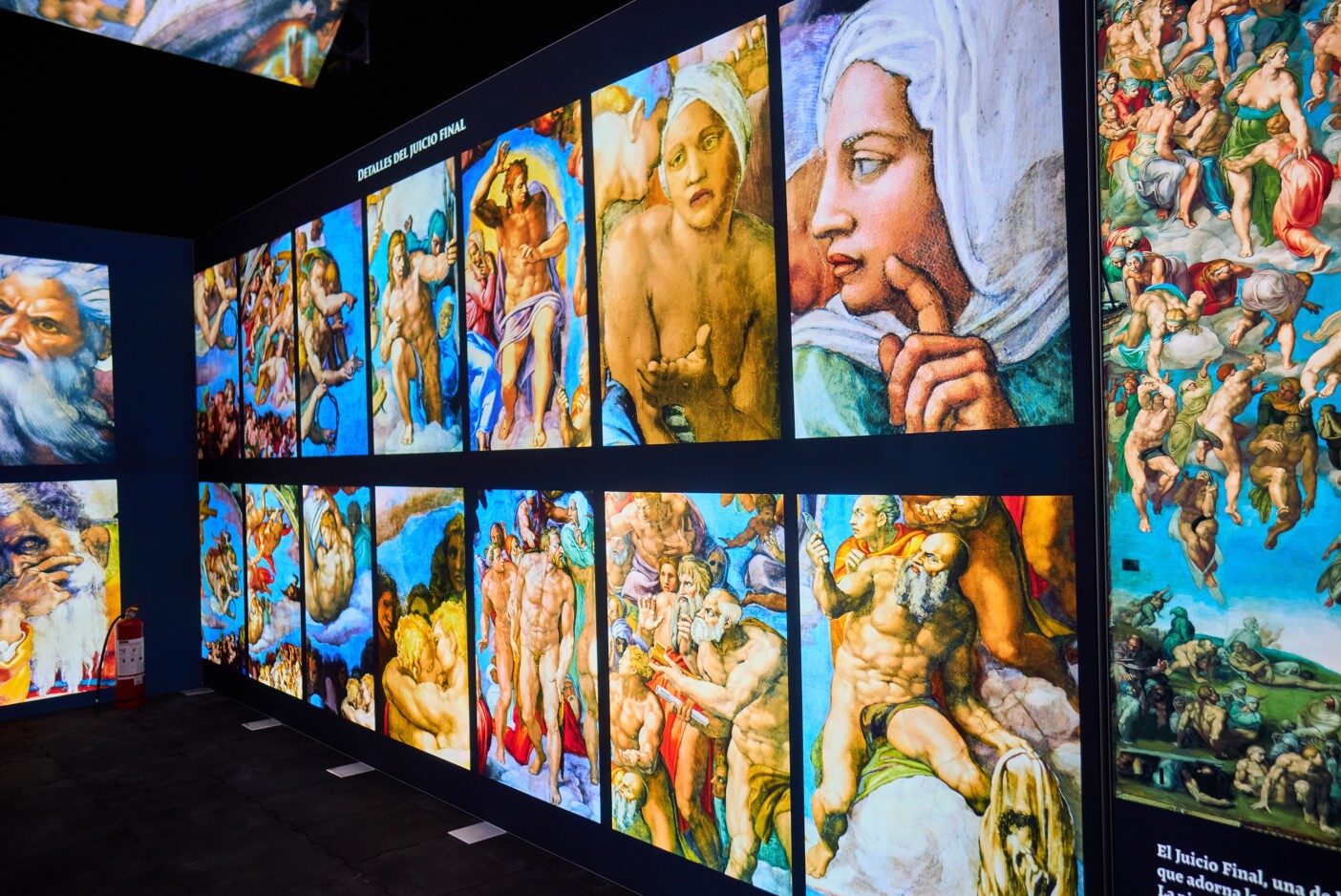
Walking into Michelangelo: Art & Legacy – a groundbreaking immersive exhibition at 1212 Lincoln Road, Miami Beach – is like stepping into a living, breathing chapter of Renaissance history. The organizers have achieved a miraculous feat: transporting visitors across centuries and continents, straight into the core of Michelangelo Buonarroti’s genius. It is not just a display of artworks—it is an orchestrated dialogue between past and present, a vivid exchange of light, marble, fresco, and human emotion.
From the very first steps inside the cool, air-conditioned venue – operating daily inside a modern gallery space – you are instantly enveloped in the spirit of high Renaissance artistry. A life-size reproduction of David stands sentinel in the entrance hall: every sinew, every curve of marble, meticulously rendered to replicate the divine original. But this is more than mere mimicry. By situating David at eye level—almost shoulder-to-shoulder with visitors—the installation humanizes the sculpture, reminding us that Michelangelo’s monumental creation was carved not from celestial granite but from humble Carrara marble .
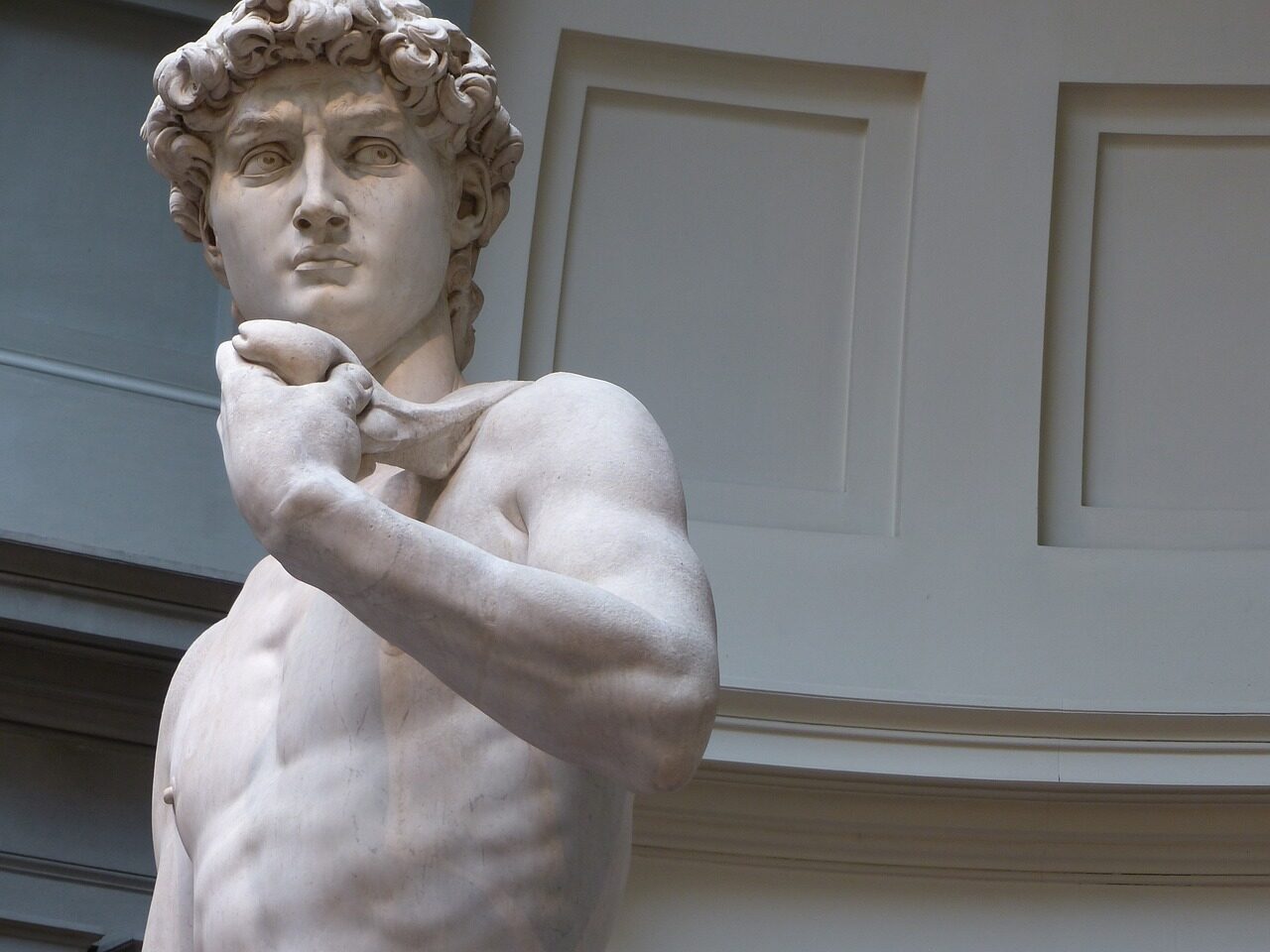
One can almost feel the sculptor’s hand in the stone, echoing his famous declaration:
I saw the angel in the marble and carved until I set him free
Moving further into the exhibit, one encounters a breathtaking re-creation of the Sistine Chapel ceiling, presented through floor-to-ceiling projections and immersive soundscapes. The ascent to “Heaven” through the corridors of “Hell” is not just narrative—it’s spatial and profoundly experiential. Visitors walk beneath a virtual frescoed sky, eyes uplifted, absorbing every brushstroke of “The Creation of Adam,” “The Last Judgment,” and their neighboring prophets and sibyls. It’s as if Michelangelo’s four years suspended on scaffolding—painting upside-down, soaked in sweat, quivering with physical and spiritual intensity—have been compressed into a single, enveloping sensory moment .
What sets this presentation apart is its integration of modern technology with traditional artistry. The exhibition doesn’t attempt facsimile—they do more. The projections shimmer with nuance: the flesh-tones appear warm and living; the musculature pulses with anatomical precision; and Michelangelo’s concealed ironies—like the divine spark of intelligence hidden in God’s arm, alleged references to human brain in “Creation”—are narratively spotlighted . It is, in every sense, an act of Renaissance reimagining, but one that respects, rather than supplants, the original genius.
Central to the journey is the Creative Lab, where visitors become apprentices of the master. Armed with pencils and sculptural media, participants are invited to sketch the vaults, mold forms, and explore the mechanics of compositional harmony. This interactive component transforms spectators into co-creators—children and adults alike—to feel the mental geometry that Michelangelo balanced so deftly. It is a gesture of generosity to audiences, especially younger visitors, bridging centuries through the elemental act of creation .
Equally poignant is the display of The Pietà and Moses—each cast in life-sized fidelity. The Pietà’s tender sorrow is palpable; Mary’s features, carved with such delicate precision, resist any sense of grandiloquence, retaining instead human intimacy. Moses, with his legendary horns—due to a mistranslation of Hebrew and Latin—stands regal, indomitable, yet flawed, reminding us that even divinity in Michelangelo’s hands rests on human misconception . There’s an elegance in how the installation allows visitors to circle each figure, observing it from all angles—something rarely possible in crowded museums. This spatial freedom transforms appreciation into personal encounter, an unmediated communion with stone and spirit.
The exhibition’s orchestration is informed by thoughtful curation: the lighting is controlled with intentional restraint, avoiding glare or theatrical excess, so as to evoke a sacred space; the ambient temperature is maintained at a serene 72° F, deliberately contrasting with Miami’s external heat and underscoring a gentle respite: both literal and metaphorical . Even the absence of food and drink—explicitly chosen to maintain the sanctity of the experience—invites a focused immersion, unbroken by external distraction .
Michelangelo was more than a sculptor or painter—he was an architect and poet, a philosopher of form and formality. This exhibition honors his multifaceted genius by offering layered access: aesthetic, intellectual, tactile, historical. Visitors leave not only with visual memories but with deeper comprehension of his methods—how he studied anatomical specimens, how he balanced classical restraint with emotional expanse, how his rebellious spirit allowed him to embed subtle critiques of authority within the grandeur of ecclesiastical commissions .
For the modern public—thirsting for experiential authenticity—this show is timely and transformative. Michelangelo’s work, so often seen in textbooks or behind glass walls, becomes visceral: we see, feel, even almost touch. Families can learn together in the Creative Lab; scholars can contemplate Michelangelo’s genius with every turn; lovers can stand under the echo of divinity and mortality that The Pietà evokes. It revitalizes art history, making it a living discourse rather than a quiet, dusty archive.
It is especially noteworthy that this exhibit emerges in Miami—a city of dynamism and cultural crossroads. Here, Renaissance splendor converses with contemporary rhythm. The collaboration with local institutions, sponsors, and city permits points to a vibrant civic investment in arts and legacy . It exemplifies how classical masterworks need not remain locked in distant European vaults—they are, after all, global patrimony, meant to inspire successive generations worldwide.
At a time when digital overload numbs sensitivity, when images fragment into social media feeds, Michelangelo: Art & Legacy offers something rare: depth. It is a retreat into proportionality, into the study of human form, into metaphysical grandeur. The echo of Michelangelo’s own words—“The true work of art is but a shadow of the divine perfection”—resonates deeply here michelangeloartandlegacy.com. The exhibition doesn’t just shadow perfection—it gestures toward the divine spark hidden in every human venture.
Finally, its limited six-month duration (April through July 2025) should not be seen as a restriction, but as a call—a call to experience, now, the union of timeless art and modern technology. If ever there was a time to stand beneath The Creation of Adam, to walk among marble figures, to sketch in the studio of a Renaissance master—this is it.
This exhibition is a gift: to the curious, the reflective, the family, the scholar, the seeker. It is Michelangelo realized not only in stone and paint, but in breath, in space, in community. Immersive, but intimate. Monumental, but gentle. Timeless, yet unmistakably present. The legacy of Michelangelo lives again in Miami—and for those who step into this installation, that legacy becomes theirs, too.